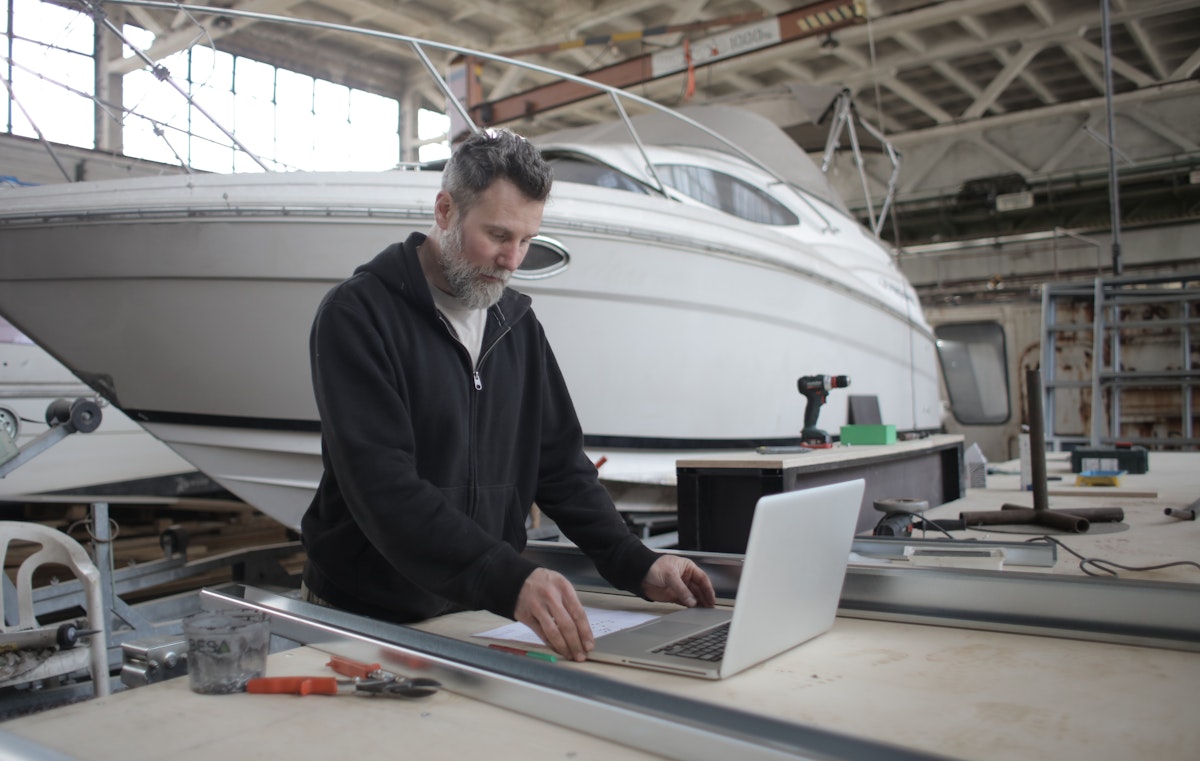
A marine service shop spends three months implementing a popular generic business management system. They hire consultants to customize fields and workflows, build custom integrations with time tracking and parts ordering tools, train staff on complex processes, and create workarounds for functions that don't quite fit. Six months later, adoption is poor—team members complain the system "doesn't understand boats" and revert to spreadsheets for critical functions.
Another shop implements marine-specific platform. Setup takes two hours. Training takes 20 minutes. Within two weeks, full team adoption with complete documentation and dramatically improved efficiency. The difference: software built for marine service reality rather than adapted from generic business tools.
The Generic Software Adaptation Problem
Generic business software was designed for different industries and workflows: B2B sales companies managing lead pipelines, Professional services tracking billable hours by client, Retail businesses with product inventory, or Field services for HVAC, plumbing, electrical work on buildings.
These industries have fundamentally different requirements than marine service. Forcing boat service into generic architectures creates constant friction.
What Makes Marine Service Unique
Marine service has specific characteristics that generic tools don't accommodate: Primary entity is "boat" (not person or company), Complex equipment hierarchy (boat → systems → equipment → components), Work organized by boat systems (engine, electrical, plumbing, electronics), Critical importance of serial numbers and equipment specifications, Heavy photo documentation requirements (equipment conditions, installations), Mobile-first workflows (technicians work on boats at marinas), Offline operation necessity (marinas have terrible connectivity), Parts identification challenges (thousands of specialized marine components), and Service history organized by equipment (not just chronological client timeline).
Generic tools lack built-in understanding of these marine-specific realities.
The Boat-Centric Data Architecture
Marine service needs boat-first data organization: Boat as primary entity (not contact or company), Equipment hierarchy within each boat (engines, systems, components), Service history by equipment ("all engine work on this boat"), Maintenance schedules by equipment and usage, and Parts tracking linked to specific equipment.
Generic CRMs organize around people and companies. You can customize to include boat information, but the fundamental architecture fights you. Industry-specific platforms are boat-centric by design.
Equipment Catalogs and Marine Domain Knowledge
Every boat has similar systems: engines, electrical systems, plumbing, electronics, HVAC, navigation. Industry-specific platforms include these categories and common equipment types built-in.
Generic platforms start with blank slate. You build equipment categories from scratch. Every implementation recreates the same marine service architecture. Industry-specific platforms include marine domain knowledge, eliminating redundant custom development.
Mobile Workflows Built for Field Reality
Marine technicians work on boats at marinas—not in offices. Industry-specific mobile apps are designed for field reality: Large touch targets for gloved hands or dirty conditions, Offline capability throughout (marinas have terrible connectivity), Quick photo capture integrated with job context, Real-time time tracking with job association, Client messaging templates for common updates, and Parts identification using camera.
Generic business software often has mobile apps as afterthought—adapted from desktop interfaces rather than designed for mobile-first field work. Result: clunky navigation, connectivity dependency, and poor technician adoption.
Photo Documentation Integration
Marine service is intensely visual: equipment conditions, serial numbers, installation details, issues requiring repair. Industry-specific platforms treat photos as first-class data: Capture within job context (automatic association), Organize by boat and equipment automatically, Attach to client communications effortlessly, and Search by boat, job, or equipment.
Generic platforms treat photos as file attachments—manual upload, manual organization, limited integration. This friction means photos stay in camera rolls rather than proper documentation.
Marine-Specific Parts Management
Marine equipment uses specialized parts: engine components, marine electronics, boat-specific hardware, plumbing and through-hulls. Industry-specific platforms include: Marine parts catalogs and databases, Serial number-based identification, Supplier integration for marine distributors, and Installation history linked to equipment.
Generic platforms have no parts catalogs. You can build custom parts database, but you're starting from zero rather than leveraging marine industry knowledge.
Service History by Boat System
Critical question for marine technicians: "What service has been performed on this boat's engine?" Industry-specific platforms organize service history by equipment system, showing complete timeline for specific components.
Generic CRMs show chronological activity timeline mixing all interactions with client regardless of boat or system. Finding "all engine service" requires manual filtering—if activities were even tagged consistently.
Maintenance Scheduling for Marine Reality
Boat maintenance schedules by multiple triggers: Calendar time ("Annual service each spring"), Engine hours ("Oil change every 100 hours"), Usage patterns ("Check zincs after extended cruising"), and Seasonal events ("Winterization when hauling out").
Generic reminder systems are calendar-only. Marine-specific platforms handle complex maintenance scheduling matching how boats are actually serviced.
Implementation Speed and Adoption
Generic platform implementation is lengthy process: 2-4 weeks of consultant-led customization, Building marine-specific architecture from scratch, Extensive staff training on custom workflows, Ongoing customization maintenance, and Often poor adoption due to complexity.
Industry-specific platform implementation is rapid: 1-2 hours initial setup (marine architecture already exists), 20 minutes technician training (intuitive workflows matching industry patterns), 1-2 weeks to full adoption, and Minimal ongoing maintenance (platform updates include industry improvements).
The Total Cost Reality
Generic platforms often appear less expensive initially, but true costs include: Customization consulting fees ($5,000-15,000), Ongoing customization maintenance, Third-party integrations (time tracking, mobile apps, parts management), Staff time learning and adapting to poorly-fit tools, and Lost efficiency from suboptimal workflows.
Industry-specific platforms have transparent pricing with lower total cost: Everything needed included in subscription, No customization consulting required, Integrated functionality (no third-party tools to integrate), Fast adoption (minimal training time), and Higher efficiency (workflows match industry patterns).
The Network Effect of Industry Platforms
Industry-specific platforms gain compound advantages over time: Learn from thousands of marine service shops (not generic business users), Platform improvements apply directly to your workflows, Feature development prioritizes marine industry needs, and Community knowledge sharing among marine service providers.
Generic platforms improve for their primary markets (sales, general field service). Marine service remains niche use case with minimal platform investment.
Data Quality and Completeness
Tools that match workflow patterns achieve better adoption and data quality: Industry-specific: 95% photo documentation rate, accurate time tracking, consistent service notes, complete equipment histories. Generic (customized): 30-40% photo documentation, estimated time tracking, inconsistent or missing service notes, and incomplete histories due to poor adoption.
Better data enables better business decisions—profitability analysis, client value assessment, service optimization.
Future Capability Foundation
Marine-specific platforms develop industry-specific innovations: AI-powered parts identification from photos, Predictive maintenance based on service history patterns, Integration with marine monitoring systems, Automated warranty claims for marine equipment, and Virtual diagnostic assistance for boat systems.
These innovations require marine domain knowledge in platform architecture. Generic platforms won't develop marine-specific advanced capabilities.
When Generic Tools Make Sense
Generic business tools work well for non-service marine businesses: Boat sales and brokerage (sales pipeline focus), Marine product wholesale (B2B sales), Marina management (slip rentals, not boat service), and Marine consulting (time tracking by project).
But for actual boat service operations—diagnosing, maintaining, repairing boats—industry-specific architecture delivers dramatically better results.
The Industry Platform Advantage
Platforms like Yachtero were built specifically for marine service: Boat-centric architecture (boats as primary entities with equipment hierarchies), Marine domain knowledge (common boat systems, equipment types, service patterns), Mobile-first design (offline capability, field-optimized interfaces), Photo documentation throughout (integrated, not afterthought), Parts identification and tracking (marine-specific catalogs), Service history by equipment (organized for technician workflows), and Maintenance scheduling (calendar, hours, seasonal triggers).
This eliminates the adaptation layer required with generic tools. Workflows match industry patterns natively. Team adoption happens quickly. Business value appears immediately.
The bottom line: Generic business software forces marine service into inappropriate architectures—requiring extensive customization, creating adoption challenges, and delivering suboptimal results. Industry-specific platforms built for marine reality deliver dramatically better outcomes: boat-centric data organization, marine domain knowledge built-in, mobile-first field workflows, integrated photo documentation, marine parts management, and rapid implementation with high adoption. Total cost is lower despite potentially higher subscription prices (no customization fees, faster adoption, better efficiency). Result: 95% documentation completeness, 15-25% more captured billable hours, 5-10 hour weekly time savings, and foundation for future marine-specific innovations. Industry-specific software wins.
Enhance Your Boating Experience
Unlock a more organized, efficient, and enjoyable boating experience with Yachtero. Download the app today and discover the benefits of AI-powered assistance. Register now and take control of your boat!